Organization Design in the age of Enterprise AI
The organization design that finally solves the distribution problem for intelligence at enterprise scale The way we think about organizing work has changed four…


The closed-loop framing of enterprise AI is a good starting point. But it isn’t the ending point: what happens when you have myriads of these loops running simultaneously, across functions, at different time horizons, and they start fighting each other?
Enterprise AI circles have started to think of companies as closed-loop control systems. You sense the environment, compare it to a target state, generate a corrective action, execute, measure, learn, and adapt. The AI layer makes each step faster and more intelligent. This is a useful frame. It doesn’t go far enough.
What it describes is a single loop. Enterprises are not single control loops but hierarchies of interacting loops operating across different time horizons. AI-driven acceleration without damping and tier separation produces organizational oscillation rather than intelligence. AI-first enterprises therefore require a modular system architecture composed of bounded, tiered, and loosely coupled decision systems.
That’s not an AI problem. It’s a systems architecture problem. And it has two concerns that rarely get named directly: damping and tier-separation. The solution is to run the enterprise as a system of tiered control loops, and construct enterprise intelligence as the ability of the organization to coordinate coherent action across functions, time horizons, and changing environmental conditions. Enterprise intelligence, then, is not the result of the intelligence of individual agents scaled upward. It is the outcome of the intelligence, stability, and coherence they collectively produce.
Damping. In control theory, a loop’s behavior is characterized partly by its damping coefficient. An underdamped system overshoots its target and oscillates before settling. An overdamped system responds too slowly to reach the target in useful time. A critically damped system reaches the target as fast as possible without oscillating: that is the best option.
Interacting Loops. Individual business loops can each be well-designed in isolation and still produce oscillation at the system level. This is the insight Jay Forrester established in Industrial Dynamics in 1961. Hau Lee, Padmanabhan, and Whang popularized it decades later as the Bullwhip Effect: each node in a supply chain applies locally rational ordering logic, but the coupling of those loops amplifies variance as you move upstream. A 5% demand fluctuation at retail becomes a 40% production swing at the manufacturer. Every loop behaves correctly. The system oscillates wildly. This isn’t limited to supply chains, it’s the structure of any system where multiple feedback loops share resources, operate on overlapping time horizons, or respond to each other’s outputs.
Pipeline Lags. John Sterman’s experimental work showed that managers systematically ignore pipeline state when making corrections. They see the gap between target and current state and overcorrect, not accounting for corrections already in flight (“in the pipeline”, wending their way through unavoidable latency). That is an organizational damping coefficient problem that produces thrashing. Overcorrections lead to oscillation between too much and too little.
Thrashing. When two corrective loops both respond to the same stock (revenue, headcount, opportunity pipeline, etc.) each loop’s correction becomes a disturbance for the other. The result is amplified oscillation that neither loop, on its own, would produce. Peter Senge called this “oscillating policies.” Control theorists call it loop interference. The enterprise outcome is the same: decisions that cancel each other out, or worse, reinforce each other’s errors.
AI increases speed and optimization pressure across organizational loops, making damping and coordination even more important. An AI-accelerated enterprise can make things worse: faster sensing and faster corrections drive more loop-loop interactions so that oscillations happen faster. Speed is not stability. So why not add another control system to make all these loops play nicely together? A layer on top, watching the layers below, assuring coherence and avoiding oscillations?
Adding a control loop on top of control loops creates a higher tier. This is the bottom-up driver for tiered loops: the higher tier manages loop-loop interactions and propagates bottom-up signals such as supply breakdowns or unexpectedly large orders across functions.
We expect higher-tier controllers to manage the next lower tier. The top-down flow starts with strategize: set strategies composed of enterprise goals such as revenue, growth, or market share in selected markets structured as geos or industries for selected products and services. The next tier, plan, uses the strategies to make plans for sales staffing, market development, customer support, etc., fanning out across functions. The tier below it, execute, works with the sales staff to drive them towards meeting the plan. The final tier, transact, works at the boundary between the enterprise and the outside world to conduct business. A transaction is not an in-house process: it reaches beyond the organization’s boundaries and so it inherently faces unknowns. A customer can refuse to take a call, a truck carrying components may break down, a deal may close unexpectedly fast.
Tiering is a natural fit for organizations that set and follow an enterprise-wide strategy.
The higher the tier, the longer the duration of its control loop. A planning decision to staff a sales team to acquire customers in Germany will take time to execute. Changes in the plan increase operations and execution risk to the point where many plans are frozen for a quarter or for a specified duration. Each control loop can be characterized by a time horizon that must be short enough to direct its lower-tier consumers and long enough for the lower tier to produce results before the directions change. Imagine a task-allocation system that reprioritizes tasks or reallocates tasks before its previous allocated and prioritized tasks get done. It results in constant task-switching that increases delays and mistakes.
Tier separation is a coordination property of the system architecture, not a reflection of managerial hierarchy.
Control systems are used in multiple domains, especially in engineering of automata such as CNC machines, warehouse robots, or drive-by-wire airplanes. A simple control loop has a controller that takes decisions, the decision is acted upon by an actuator, and the output is taken into a feedback loop that is used to update the controller.
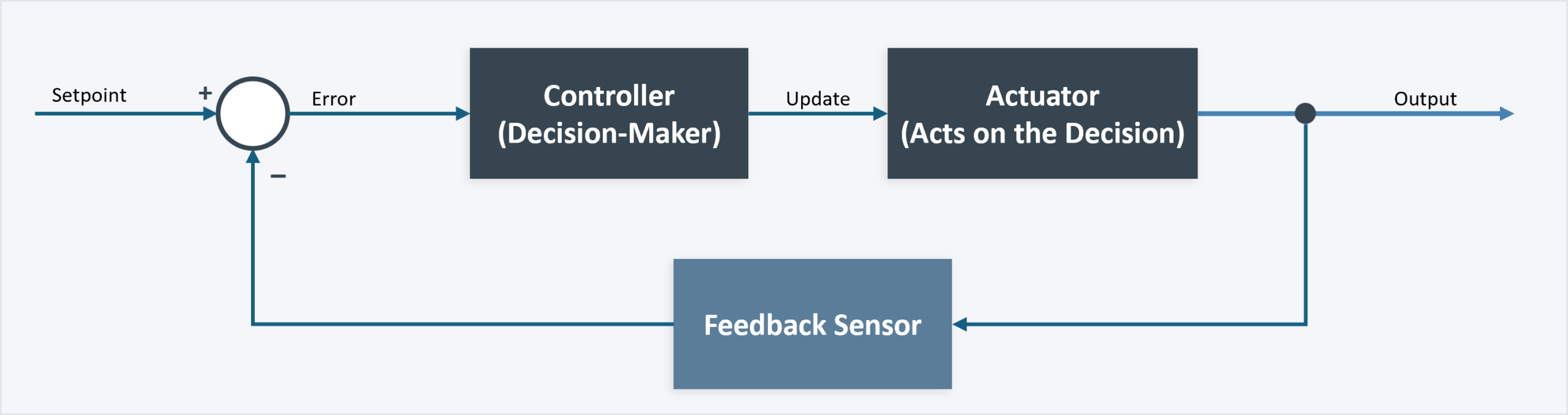
Figure 1: Generic diagram of a closed-loop control system
Saxena and Gupta’s The Analytics Asset posits decision cycles as the control loop for organizations. It consists of preparing data for the decision, the decision-making process, acting on the decision, assessing the results, and then updating the decision-making process and tools from the learnings.
Agents for organization management can be modeled as control loops or as decision cycles. The concept of Agentic AI, however, has already led to broad and ambiguous definitions of what an agent is.
For simplicity, we define organization decision-making loops or agents as playbooks. For organizations, the learning loop has to deal with multiple factors affecting outcomes, so it needs to employ theories of natural experiments to determine adaptive responses.
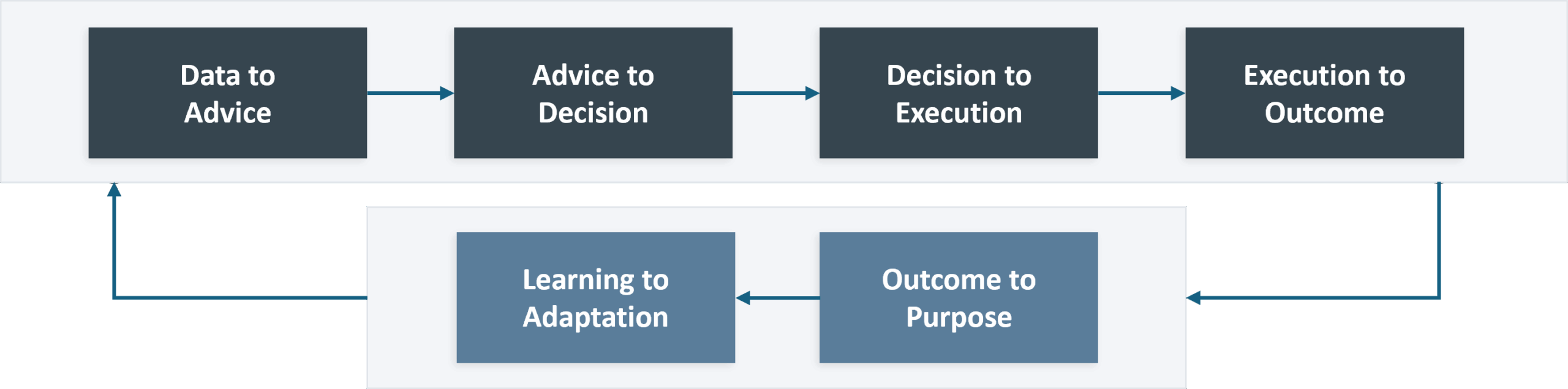
Figure 2: Playbooks are the Control Systems for Organizations
We use playbooks and systems of playbooks to define the requirements for control of organizations that consist of a mix of people and automata. A playbook is a bounded decision system with:
Much of the current discourse around AI agents assumes that intelligence emerges by increasing the capability of individual agents. Better reasoning models, larger context windows, improved planning, tool use, and autonomous execution are expected to produce increasingly intelligent enterprise behavior. But enterprises are not single-agent systems. They are large-scale multi-agent systems composed of interacting decision loops operating across functions, objectives, and time horizons.
This distinction matters because the dominant failure modes of multi-agent systems are not failures of individual intelligence. They are failures of coordination.
AI research has already encountered these problems in smaller experimental settings. Multi-agent systems exhibit instability, reward hacking, specification gaming, oscillation, resource contention, and emergent behavior that no individual agent was explicitly designed to produce. Agents pursuing rational objectives locally can collectively generate irrational results globally. Reinforcement-learning systems discover shortcuts that optimize the metric while violating the intent of the system. Autonomous agents compete for shared resources, interfere with each other’s feedback loops, and amplify environmental noise through recursive adaptation.
Enterprises already exhibit these behaviors without AI. Sales maximizes bookings while implementation capacity collapses. Procurement minimizes inventory while manufacturing loses resilience. Customer support optimizes ticket closure time while customer satisfaction deteriorates. Finance suppresses spending variance while product development loses adaptability. Each function behaves rationally within its own objective function. The organization becomes incoherent.
The introduction of AI agents accelerates these dynamics. Faster sensing, faster optimization, and faster corrective action increase loop gain across the organization. Without architectural constraints, the enterprise becomes a high-frequency multi-agent system operating without damping or coordination discipline. The result is not enterprise intelligence. It is enterprise-scale specification-gaming.
This is why enterprise intelligence cannot emerge from unrestricted autonomous agents operating against isolated local objectives. It requires system architecture.
The systems-of-playbooks model reframes the enterprise explicitly as a structured multi-agent system. Each playbook is a bounded decision system with a defined objective and constrained scope of action. No playbook is responsible for optimizing the entire enterprise. Each playbook optimizes within carefully designed constraints while higher-tier playbooks coordinate across functions and longer time horizons. The system-of-playbooks provides the requisite variety for system behaviors (Ashby, 1956) while preserving stability through damping and time-scale separation.
This hierarchy works as a damping and coherence mechanism for the organization. Tier separation prevents short-term local variance from destabilizing strategic systems. Playbooks interact through constrained interfaces rather than unrestricted direct interference. Each playbook controls the data and signals it uses to spawn and react. Interruptions cannot corrupt their functioning. Policies, priorities, and constraints propagate without requiring centralized real-time control of every transaction. This transforms enterprise intelligence from a single-agent reasoning problem into a coordination architecture problem.
The challenge is no longer merely building intelligent agents. It is constructing systems in which many specialized agents can interact without destabilizing the enterprise. Organizational intelligence emerges from correctly bounded autonomous agents (playbooks) operating within a coherent system of tiers, constraints, signals, and coordination.
The AI-First enterprise therefore cannot be designed as “one big enterprise agent” or a flat network of autonomous agents. It must be designed as a system of tiered playbooks with explicit damping, time-scale separation, and cross-functional coordination. Enterprise intelligence comes from the stability and coherence of the system of playbooks.
The literature across control theory, system dynamics, hierarchical production planning, and cybernetics converges on a consistent picture that a well-structured system of playbooks is composed of tiers with different time horizons.
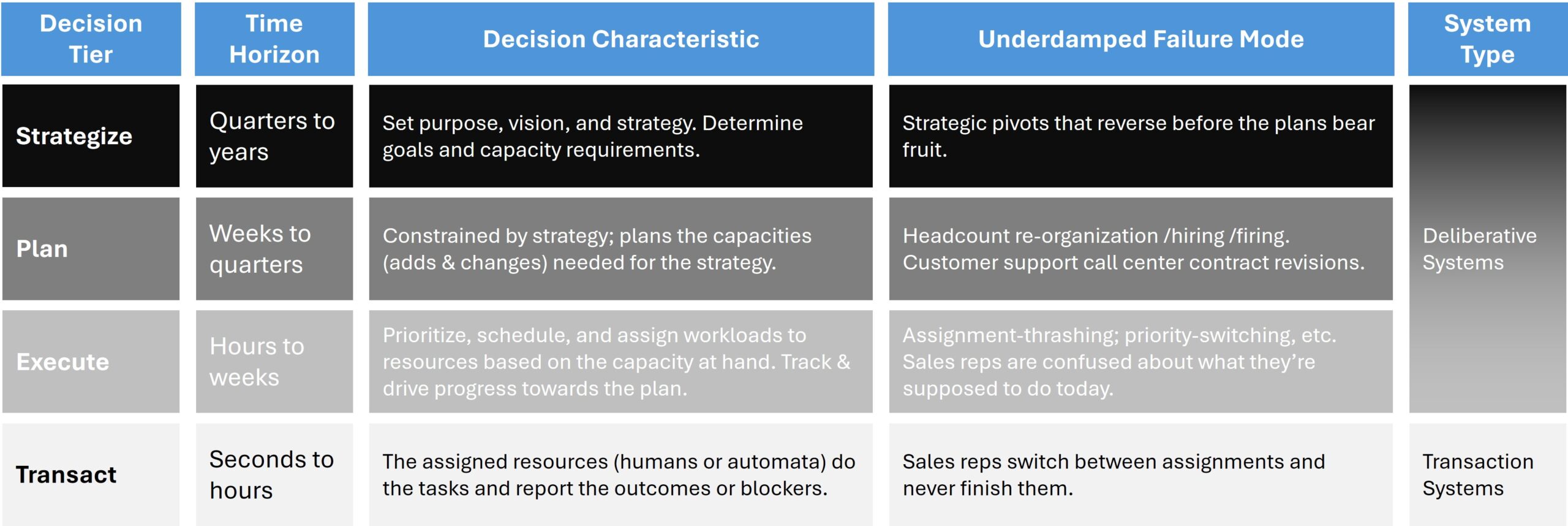
Figure 3: Decision Tiers, Time Horizons, and System Type
The table makes the design principle explicit: each tier needs to be insulated from the noise of the tiers above and below it by time-horizon separation. Strategy doesn’t react to daily opportunity-pipeline variance. Execution doesn’t wait for quarterly planning to resolve before acting. The time-horizon of tiers is carefully managed to be responsive but not hyperactive. The time-horizon slices drive the number of tiers required, and four tiers are commonly used.
The Strategize, Plan, and Execute tiers use deliberative systems. They consolidate signals across functions, evaluate tradeoffs, resolve conflicts between objectives, and select coherent actions across longer time horizons. The Transact tier is categorically different: it must react immediately to external events.
A fraud detection engine processing a card authorization. A phone-call routing system. These systems cannot wait for enterprise-wide optimization or multi-table data consolidation. They work with bounded reflexes encoded in advance. They observe and react.
Rodney Brooks made this distinction explicit in his subsumption architecture work in 1991: reactive systems operate through direct stimulus-response coupling, without a central world model or deliberation step. The intelligence is embedded in the response architecture itself. The BDI (Belief-Desire-Intention) literature draws the same distinction from the opposite direction: deliberative agents maintain an explicit world model and reason about it before committing to action. Coherent multi-step planning comes at the expense of speed.
Beer’s Viable System Model captures this separation as system composition. System 1 is the unit that transacts with the environment. The higher management systems do not directly control System 1 in real time. They issue policies, schedules, constraints, and priorities. System 1 executes within those boundaries.
This separation exists because deliberation requires time. Reactive systems optimize response speed under bounded conditions. Deliberative systems optimize for decision quality under uncertainty. One architecture is shallow and fast. The other is deep and deliberate. Deliberation is not instantaneous reaction. It is the process of integrating information across data silos, evaluating options, and directing the right action. It pays the cost of latency to improve decision quality. The transact tier generally relies on transaction-processing systems optimized for speed, reliability, and deterministic execution. Order entry reduces inventory, for example, which lowers the “available to promise” quantity for all subsequent orders. ACID systems are used to guarantee Atomicity, Consistency, Isolation, and Durability for each transaction.
In engineering systems, latency is often treated as a defect to be minimized. In organizational systems, some forms of latency are the mechanism that makes intelligent coordination possible. A planning system that pauses to evaluate staffing constraints, inventory exposure, market conditions, and downstream execution capacity is slower than a reflexive response system. That delay is not inefficiency; it is the cost of coherence.
Deliberative decision tiers are therefore separated from the transact tier not merely by playbook hierarchy, but by computational necessity. Deliberative and transaction systems solve fundamentally different computational problems using different system architectures.
An AI engineer who attempts to use deliberative playbooks at the transact tier eventually encounters this architectural boundary. In the limited cases where inference is fast enough, the approach works, otherwise the engineer must use OLTP and reactive-system design patterns.
The pursuit of a real-time enterprise therefore becomes self-defeating beyond the transact tier. Eliminating all latency collapses deliberative systems into reflex systems. The organization becomes highly reactive, locally focused, and globally incoherent.
Intelligent enterprises need both deliberative and transaction systems. The objective is not maximum speed at every tier. It is the correct speed for the cognitive function being performed.
A system that reacts instantly to everything cannot deliberate about anything. A transaction system that needs to wait on a deliberative system may be functionally impaired.
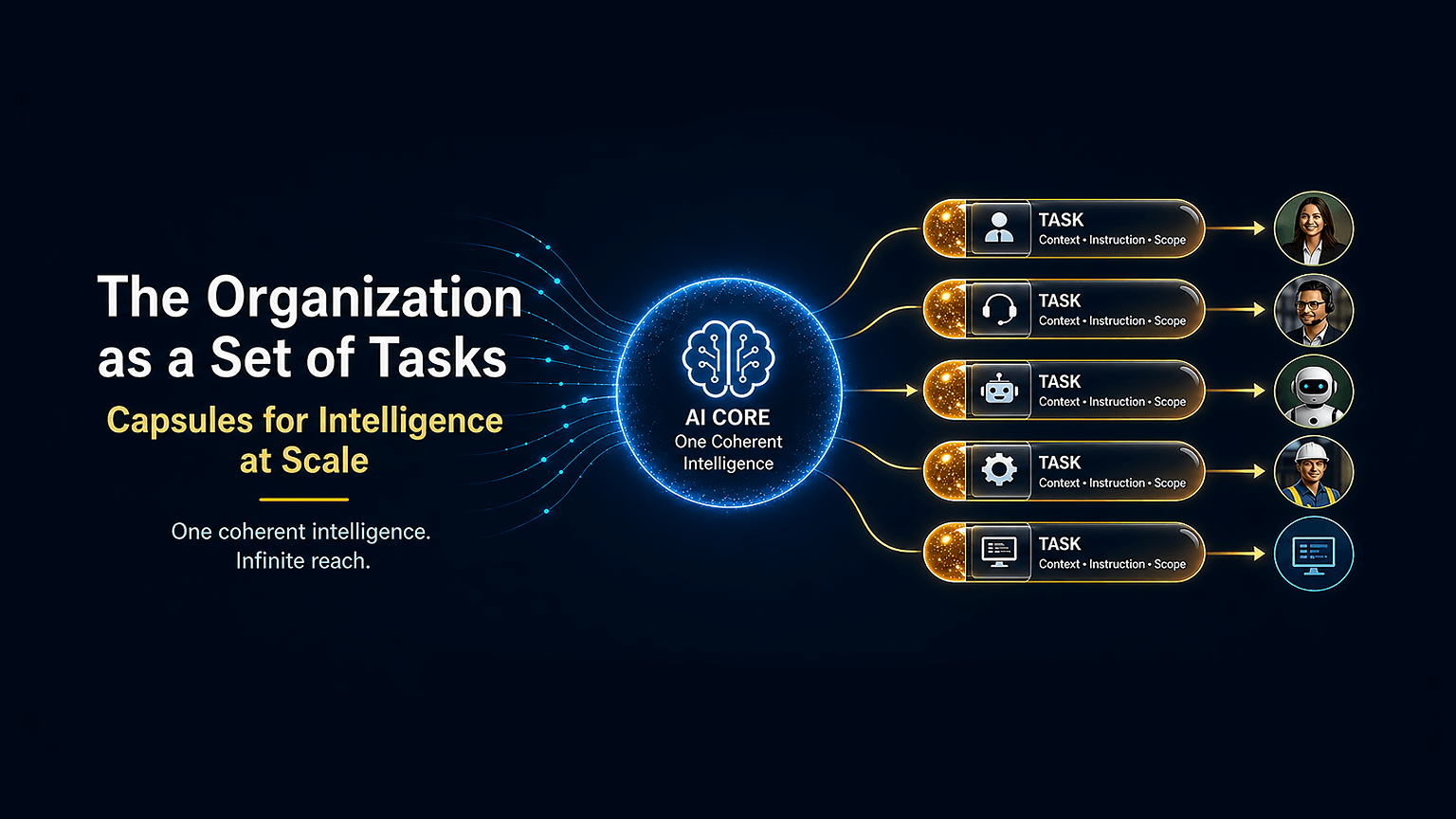
The bullwhip effect is not a data problem or a forecast accuracy problem. It is a system-of-loops problem: each function’s rational local response amplifies variance for adjacent functions. The fix is not bigger models that span departments. The fix is a modular architecture of loosely coupled playbooks with explicit hierarchies for tier separation. The concept of an AI Core or a coherent enterprise model is a composite of multiple playbooks, with each working as a component in a loosely coupled hierarchy.
The supply chain literature (Fordyce, Hax and Meal, Bitran and Haas) handles tier separation rigorously but treats damping implicitly, as a constraint satisfaction problem rather than a dynamic stability question. The system dynamics literature (Forrester, Sterman, Senge) handles damping and oscillation rigorously but treats tier-separation loosely, as a set of interacting models without explicit hierarchy. Beer’s VSM has a broader synthesis and categorization of concerns, but it is uncommon in management circles.
Organization-wide decision systems require a synthesis of tier decomposition and cross-loop damping. And every playbook must provide correctly damped and calibrated responses. This presents a modeling and tuning problem at an unprecedented scale. Organizational coherence is a Grand Challenge for intelligent systems.
In GTM and RevOps specifically, the discourse is still at the “closed-loop AI” stage: which is progress, but it’s a single-loop frame applied to a multi-loop problem. The consequence is that most enterprise AI deployments for revenue functions are implicitly underdamped: fast-responding loops with high gain, no tier discipline, and no system mechanism to prevent cross-functional interference. In practice, damping is provided by functional silos that separate sales from pipe-generation, customer support, product management, and other related departments from each other.
RevInsight enables the organization with a system of tiered playbooks operating across distinct decision horizons. Instead of a monolithic AI system, the system decomposes the enterprise requirements into bounded playbooks that operate with bounded scope, time horizon, and authority. This prevents local control loops from destabilizing unrelated parts of the enterprise while still allowing cross-functional coordination through shared signals and escalation paths.
Most transact-tier systems already exist, as business operations need those systems of record. Those systems, such as CRM, ERP, Customer Support, Professional Services, etc., serve as data sources for the deliberative system that RevInsight provides. RevInsight consolidates information across silos, evaluates tradeoffs, and coordinates actions across all time horizons. The execute-tier provides assignment and prioritization directions for the transact-tier.
This separation provides intelligence, responsiveness, and organizational coherence. Transaction systems continue to handle immediate operational interactions. Deliberative playbooks provide optimization, prioritization, and strategic coordination.
RevInsight coordinates the enterprise through two shared substrates: the Unified Data System and the Signals Blackboard.
The Unified Data System consolidates operational, transactional, analytical, and contextual enterprise data into a common organizational memory layer. This allows playbooks operating across different tiers and functions to reason from a shared representation of enterprise state rather than isolated departmental data silos.
The Signals Blackboard acts as the coordination substrate for the playbooks. Analyses performed on the Unified Data System continuously generate signals such as forecasts, anomalies, risks, resource constraints, performance deviations, and opportunities. Playbooks themselves also emit signals as part of their reasoning and execution.
Signals are posted on the blackboard, and playbooks subscribe to signals independent of tier hierarchy. Signals from transact and execute tiers can escalate operational conditions upward, while higher-tier playbooks propagate priorities, policies, constraints, and strategic objectives downward.
Playbooks therefore coordinate indirectly through constrained signal exchange rather than unrestricted peer-to-peer interference. This creates loose coupling between organizational control loops that preserves enterprise-wide coherence.
The central challenge of enterprise AI is not merely building intelligent agents. It is preventing locally optimized agents from generating globally unstable behavior.
RevInsight addresses this as a coordination architecture problem rather than a pure inference problem. The architecture uses:
to reduce oscillation, feedback interference, specification gaming, and cross-functional instability. This allows the enterprise to increase organizational requisite variety without requiring centralized real-time cognition or unrestricted autonomous agents.
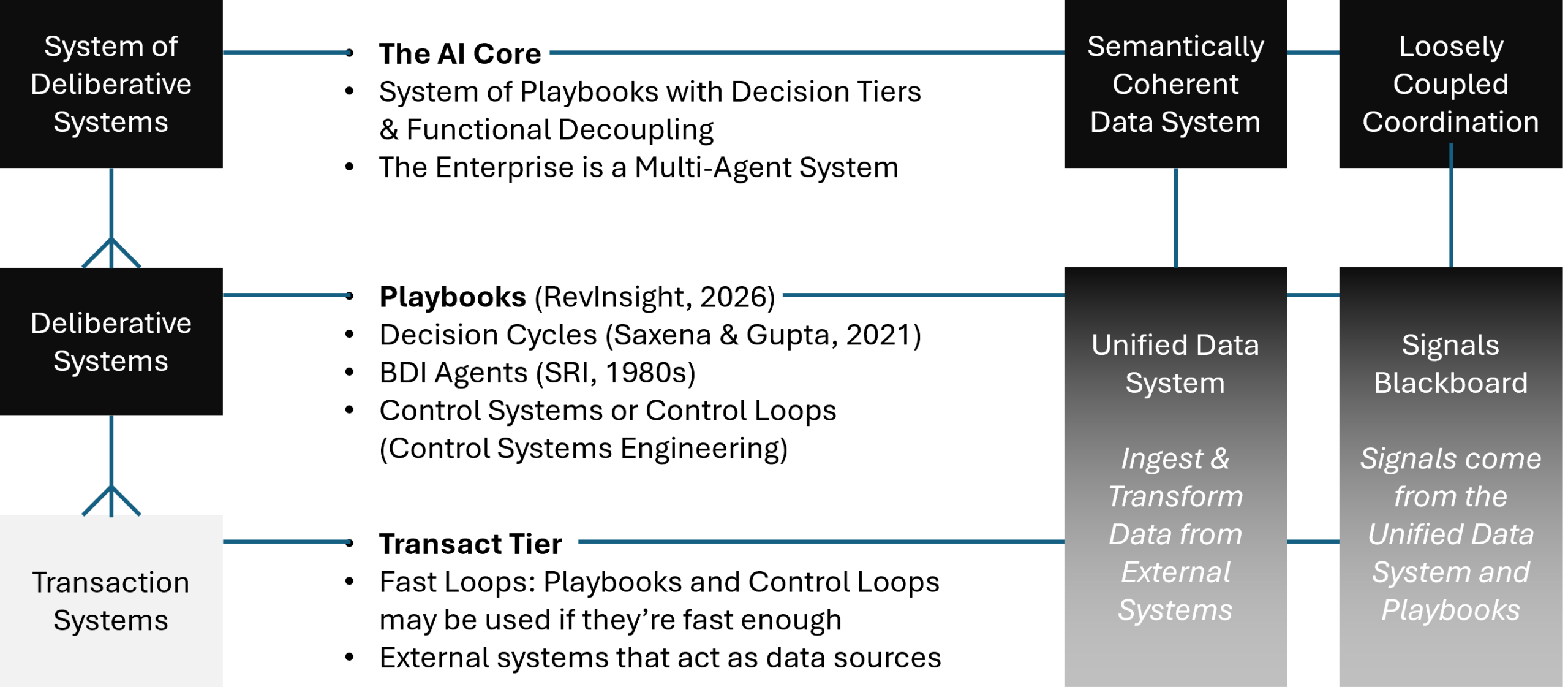
Figure 4: The AI Core as a System of Playbooks with a Unified Data System and Signals Blackboard
The result is not a flat network of AI agents competing for local optimization. It is a system of bounded, interacting control loops designed for global coherence, stability, and adaptive coordination across the enterprise.
The closed-loop framing of enterprise AI is right. Every enterprise function should sense, compare, correct, and learn. But a system of loops requires something a single loop doesn’t: a theory of how the loops relate to each other: their time-scale separation, their damping characteristics, their tier boundaries, and inter-loop coordination.
That theory exists in fragments. It lives across control engineering, system dynamics, supply chain management, and cybernetics. While the INFORMS Edelman Award winners showcase the benefits of implementing multi-domain intelligence, it’s not widely used in GTM and revenue operations and has rarely been applied to the entire organization.
Smart enterprises will use an AI Core to flip to AI-First organizational architecture. They will be the ones whose AI investments converge on better outcomes rather than faster thrashing. In the AI-First organization, the entire organization behaves with maximal intelligence.
As AI increases the speed, scale, and autonomy of enterprise decision systems, organizational stability becomes a first-class architectural problem. The challenge is not in building intelligent algorithms but in constructing organizations in which many specialized playbooks can run without causing instability. Enterprise intelligence emerges from the work of each playbook and from the organizational coherence that the system-of-playbooks collectively produces.
The author thanks Dr. Ken Fordyce for his generous contributions to this paper. Ken provided the historical context for the origin of decision-tier frameworks in industrial practice, clarifying that the tier concept was developed independently and in parallel by Karl Kempf at Intel and Gary Sullivan at IBM beginning in the late 1970s and 1980s. He supplied primary references for both lines of work, including Sullivan’s 1986 DSIM paper and Kempf’s 2004 American Control Conference paper, and directed attention to the IBM Central Planning Engine work documented in Fordyce et al. (2011). His observation that both Kempf and Sullivan would contend that failure to recognize the tiers leads to disenchantment or chaos sharpened the practical argument of the Tiered Loops section. Any errors of interpretation remain the responsibility of the author.


